
 Basket (0) £0.00
Basket (0) £0.00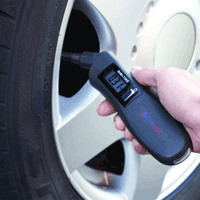 How
many of us regularly check our tyre pressures, I think the majority of
people don’t bother hopefully this guide will get us all into checking
the tyre pressure on our car a lot more. Maintaining the correct tyre
pressure is very important as it affects the safety and driving
performance, not only that but it also has an impact on the mileage and
fuel consumption of your car. Remember both under inflated and over
inflated can affect the performance and therefore it is a definite must
that you always check and maintain the correct pressure.
How
many of us regularly check our tyre pressures, I think the majority of
people don’t bother hopefully this guide will get us all into checking
the tyre pressure on our car a lot more. Maintaining the correct tyre
pressure is very important as it affects the safety and driving
performance, not only that but it also has an impact on the mileage and
fuel consumption of your car. Remember both under inflated and over
inflated can affect the performance and therefore it is a definite must
that you always check and maintain the correct pressure.
To find out the correct inflation pressure you should check the vehicle hand book, there should also be a small chart which can also be found either on the fuel cap of your car or on one of the door pillars in the car.
Tyre pressure checks should be made regularly it is to be noted that if you have been traveling a long distance on your car then you should wait till the tyres are cold otherwise you would get an incorrect reading. You should try and check the tyre pressures on a regular basis every fortnight would be a good schedule and always before those long journeys one makes, and make sure you don’t forget the spare because it is needed when you have a puncture.
Checking all five tyres is a very important safety tip, it’s a two minute process that not only improves the performance and drive quality of the car but also will save you money in the long run. Correctly inflated tyres improve fuel efficiency, tyre life and ride quality surprisingly it would also keep your car alive and kicking for a lot longer.
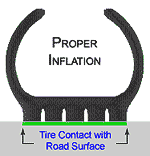
Under inflated tyres is one of the most common occurrences, most car users either do not bother filling the correct tyre pressure or they don't follow the tyre pressure regime recommended by the manufacturer. If a tyre is over inflated this causes an increase in tyre wear on the middle of the tread as the both inside and out side of the tyre do not contact the road. The opposite occurs when the tyre is under inflated the tyres wears out quicker on the shoulders. In conclusion, both over and under inflated tyres are dangerous and cause a serious breach in the safety of the car components especially on high-speed journeys. Diagram below shows the difference.
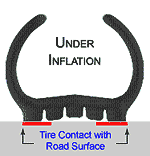
Under inflated tyres not only affect the ride quality on rough roads, but it can cause further damage to key components in your car such as the suspension and in the long run you may have to change it. You would also see that the wheel balancing and alignment may need to be done as well all because of under inflated tyres.
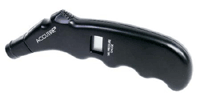
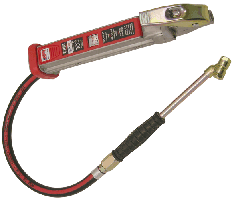
The best way to check your tyre pressure is to use a pressure gauge this is not an expensive piece of equipment and can be bought from most parts stores or online. You don't need anything hi-tech or the latest digital ones just the standard analogue is fit for the job. Inflating tyres at home can get a bit tricky as you would need a compressor. An electrical pump would be the ideal investment, if not a regular visit to the petrol station and at a cost of no more than a pound you can easily check all your tyre pressures. The types of gauges available are shown below
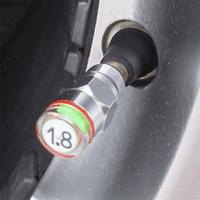
Some cars now have pressure sensors fitted to the valves and can display the tyre pressure in the car. There are also other advances including sensitive cap gauges now available in after markets. These can be fitted to the tyres inlet valve, and give a constant reading visible on the cap at all times. They act as a permanently fixed tyre pressure gauge.
In the UK, we are used to reading the tyre pressure in psi, but it is also given in bars as wel. Most Europeans tend to use the bar indications but it would be best to get a gauge that displays both psi and bar readings.